

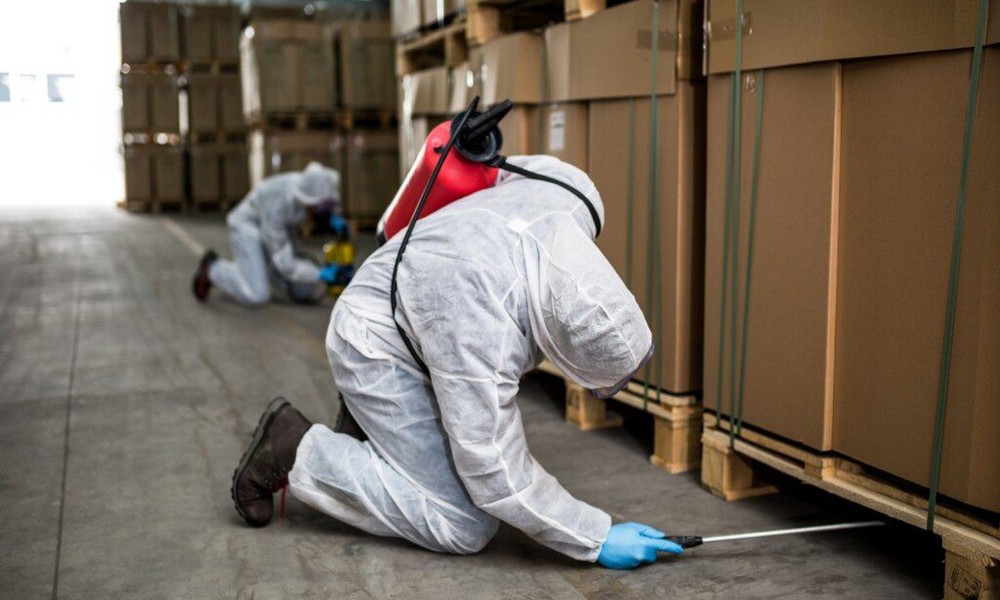
A restaurant owner in midtown Kansas City calls a pest control company about mice appearing in the kitchen six weeks after opening, assuming the landlord will pay. The lease says otherwise. A retail tenant in a Overland Park strip center finds cockroaches traveling in from the shared dumpster pad behind the building. The lease says that is the tenant’s problem too. A medical office in a multi-story building watches ant trails emerge from cracks in the exterior wall, tries to get the property manager to seal the building envelope, and ends up paying for quarterly service while the source remains untreated. Kansas City pest control providers that work commercial accounts regularly, including ZipZap Termite & Pest Control in Lawson, field these calls every week, and the pattern almost always traces back to lease language the tenant signed without reading carefully.
What Commercial Leases Typically Say About Pest Control
Commercial leases are negotiated documents, which means the pest control clause varies. A few patterns show up repeatedly across Kansas City metro leases.
Most standard commercial leases, including the forms produced by the Building Owners and Managers Association (BOMA) and widely used variants from AIR CRE and others, assign routine pest control to the tenant as part of the tenant’s maintenance obligation. Routine pest control in this context usually means the interior of the leased premises and often extends to the exterior areas immediately adjacent (within a few feet of the entry, including the space directly around the tenant’s signage or service door).
Building-systemic issues, including the exterior envelope, the roof, shared wall cavities, shared utility chases, and common areas, typically remain the landlord’s responsibility. The problem is that the dividing line between “tenant’s premises” and “building system” is often defined loosely enough that the landlord can push edge cases onto the tenant.
Triple-net (NNN) leases compound the problem because even when the landlord handles something contractually, the cost usually flows back to tenants as common area maintenance (CAM) charges. Reading the CAM reconciliation carefully after the first year tells a commercial tenant whether the pest control line they have been paying for actually covered anything useful.
When the Problem Is Bigger Than One Unit
A commercial pest problem that persists after normal service usually indicates a multi-unit or building-systemic source. Three patterns come up most often.
Rodents traveling through shared walls and utility chases. A mouse that enters the building through a loading dock in unit 4 can reach a restaurant in unit 1 through the wall cavities connecting them. Treating unit 1 alone produces no durable result. The structure requires building-wide exclusion and coordinated interior service across units to actually reduce the population.
German cockroaches spreading through plumbing penetrations. Commercial buildings share plumbing vents, drain lines, and floor penetrations that serve as direct travel corridors for cockroaches. A restaurant tenant treating aggressively while a neighboring unit sits untreated is on a treadmill. The NPMA’s commercial IPM guidelines and the USDA’s integrated pest management framework both treat multi-unit structural pest problems as building-level responsibilities rather than tenant-level ones.
Ants and wildlife entering through the building envelope. Failing caulk, damaged soffits, gaps around rooftop HVAC penetrations, and deteriorated foundation flashing let the outside in at a scale that interior service cannot address. The tenant can spray every week. The ants will keep coming.
Any of these situations calls for a documented inspection that identifies the source, and a conversation with the property manager or landlord about the building-level intervention the lease may or may not actually cover.
What Tenants Can Practically Do
Several steps improve the outcome regardless of how the lease is written.
Document the problem thoroughly. Photographs, dated service reports from a Kansas City pest control provider, and written notes on where activity appears create a record that carries weight in any conversation with the landlord and in any potential lease-renewal negotiation. Verbal complaints disappear. Written records persist.
Request an inspection from a commercial-capable provider rather than a residential one. Commercial accounts require documentation that most residential programs do not produce, including food-safety compliance logs for restaurants, pesticide-use records for medical and dental offices, and sanitation reports for properties subject to health department inspection. The written inspection report often becomes the basis for asking the landlord to address a source the lease arguably covers.
Read the lease’s maintenance clause, notice requirement, and dispute resolution language carefully. Most commercial leases require written notice to the landlord within a specified time (often 10 or 30 days) before the tenant has a cause of action. Missing that window can forfeit the right to claim the landlord should have handled the problem.
Consult a Missouri or Kansas commercial real estate attorney when the problem is serious. General legal advice from online sources is not a substitute for someone who understands the specific lease in front of them. The Missouri Bar and the Kansas Bar both maintain referral services for commercial tenant matters.
What to Negotiate at Lease Renewal
Commercial leases are renegotiated at each renewal cycle, and pest control responsibility is one of the easier clauses to adjust once a tenant has leverage. Several requests are reasonable to bring to the table.
A defined carve-out for building-systemic pest issues, specifying that the landlord remains responsible for exterior envelope problems, shared wall populations, dumpster pad management, and any infestation that predates the tenant’s occupancy.
A cap on tenant pest control obligations tied to the interior of the leased premises, excluding shared infrastructure.
A clear definition of what triggers landlord responsibility, typically documented by a licensed pest control inspector identifying the source.
A response-time obligation from the landlord once an issue is documented, often 10 to 14 business days for non-emergency situations.
None of these are unusual requests in well-negotiated leases. The tenant who asks for them during renewal and has documentation of the previous year’s issues usually gets at least some of them.
How Commercial Integrated Pest Management Actually Works
Professional commercial pest management differs from residential work in several ways. The service frequency is higher (monthly or weekly rather than quarterly). The documentation is more extensive, including treatment logs that satisfy health department, FDA, USDA, or state licensing requirements depending on the business type. The treatment products and methods are chosen to minimize disruption to the operation, particularly for food-service and medical accounts. And the integrated pest management (IPM) framework is not optional; it is usually required by regulation.
Kansas City pest control companies with substantial commercial experience, including ZipZap Termite & Pest Control, work within these constraints routinely. The service often includes sanitation recommendations, structural exclusion suggestions for the landlord to review, and staff training on prevention practices that a residential technician typically does not provide.
The Short Version
Most commercial leases in the Kansas City metro push pest control onto the tenant, even when the source is structural or building-wide. Tenants can still get good outcomes by documenting problems carefully, working with a commercial-capable Kansas City pest control provider such as ZipZap Termite & Pest Control, reading the notice and response clauses in the lease, and negotiating pest control responsibility carefully at renewal. For serious disputes, a commercial real estate attorney is the right next call.