

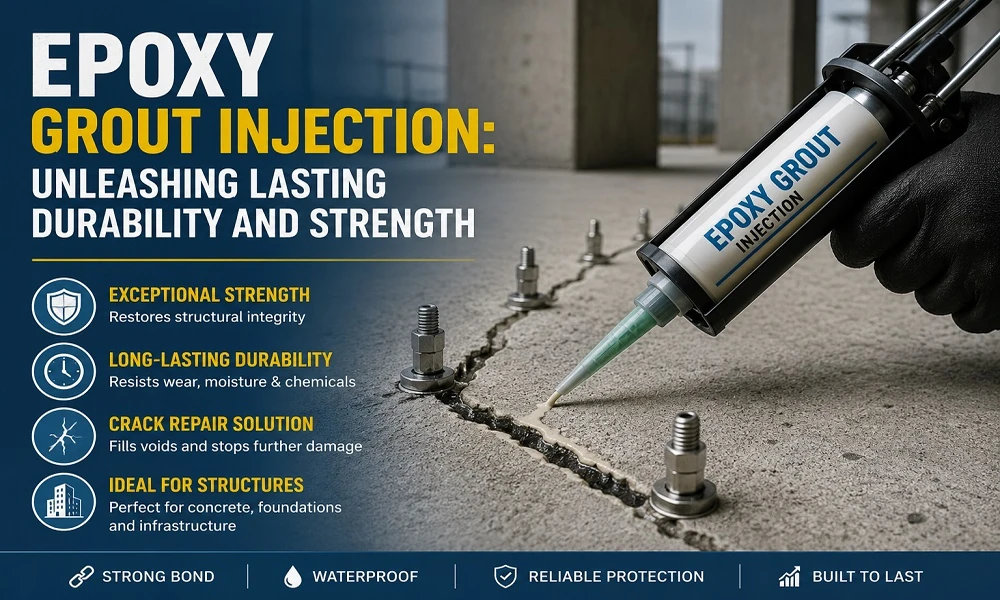
Key Takeaways
Epoxy grout stands out as a premium choice compared to traditional grout, thanks to its non-porous, impermeable properties that effectively repel water while resisting stains and chemical damage.
The compressive strength of epoxy grout significantly surpasses that of conventional grout, making it perfect for installations where exceptional durability and thermal resistance are crucial.
Characterized by a molecular structure with cross-linking resin molecules, epoxy grout boasts remarkable resistance to environmental pressures while enhancing adhesion to tiles and substrates.
This type of grout is especially effective in high-traffic areas, moisture-prone environments, and various industrial applications, showcasing its adaptability in different settings.
Furthermore, the cost-effectiveness of epoxy grout comes from its lower maintenance needs and longevity, which ultimately result in reduced overall expenses for clients.
After application, clients can look forward to enhanced structural integrity and visual appeal, ensuring installations not only function well but also maintain aesthetic value for an extended period.
Selecting epoxy grout isn’t merely a decision for durability; it signifies a dedication to quality and long-lasting performance in construction and maintenance projects.
The Science Behind Epoxy Grout Injection
How Epoxy Grout Differs From Traditional Grout
In the field of construction and restoration, grasping the differences between epoxy grout and traditional grout is essential. Traditional grouts, primarily made from cement, are porous and prone to moisture absorption. This can lead to cracks and deterioration over time. Conversely, epoxy grout combines resins and hardeners, creating a non-porous, impermeable product. This unique composition enables it not only to repel water but also to resist staining and chemical damage. Many clients have found epoxy grout to be the more effective option in high-traffic and moisture-heavy areas.
When looking at strength, differences become even clearer. Traditional grout is fragile, often susceptible to shrinkage during curing and reacting to temperature variations. On the other hand, epoxy grout cures into a robust substance, exhibiting a compressive strength that greatly exceeds traditional options, ideal for installations demanding exceptional durability.
The Chemistry That Ensures Unmatched Durability
What’s intriguing about the chemistry of epoxy grout is its intricate molecular structure. The cross-linking of resin molecules forms a solid matrix, contributing to its outstanding resistance against diverse environmental stresses. Additionally, this molecular connection enhances its adherence to tiles and substrates, ensuring the grout remains intact even under heavy loads. Notably, its thermal stability provides resilience against fluctuating temperatures, solidifying its reputation as the material of choice for areas facing extreme conditions.
Witnessing this capability can truly shift perspectives regarding material selection. Ever dealt with a tile installation where the grout simply couldn’t withstand the test of time? While traditional grout might fail in those situations, epoxy grout offers the durability needed, giving clients peace of mind that often translates into long-term savings. Ultimately, the result is not only visually appealing but built to last.
Applications Where Epoxy Grout Shines
Ideal Scenarios for Using Epoxy Grout Injection
With its incredible versatility, epoxy grout proves to be an optimal choice across a range of applications. Here are just a few prime examples:
- Heavy Traffic Areas: Retail spaces and pedestrian walkways.
- Moist Environments: Bathrooms, swimming pools, kitchens.
- Industrial Applications: Factories, warehouses, laboratories where spills may occur.
Each environment presents its own unique challenges. Take retail spaces, for instance, where constant foot traffic can quickly wear down traditional grout. The enduring strength of epoxy grout can endure this daily strain without significant deterioration. In contrast, settings exposed to moisture require a non-porous solution to prevent mold growth and decay, which is where epoxy grout truly excels.
Experts recommend that understanding the specific requirements of a space is vital when selecting grout solutions. Making knowledgeable choices leads to lasting results.
Real-World Examples: Success Stories in Various Industries
Throughout the construction landscape, numerous success stories highlight the effectiveness of epoxy grout. In a noteworthy instance, a local pool maintenance company decided to utilize epoxy grout during the renovation of a community swimming pool. The outcome? Not just improved water resistance, but also a seamless pairing with trendy tile designs. The client benefited from significantly fewer maintenance calls due to the superior longevity of the grout.
In another example, a busy restaurant chain made the switch to epoxy grout for its kitchen installations. The ease of cleaning alongside its resistance to spills proved to be incredibly valuable. Managers reported decreased costs related to repairs and replacements by opting for a more durable solution. Achieving real results hinges on finding a balance between aesthetics and functionality.
“With epoxy grout, the saying ‘you get what you pay for’ rings true; the investment pays off in the long run.” – Construction Expert
Step-by-Step: The Injection Process Explained
Preparation and Surface Assessment for Optimal Results
Before commencing epoxy grout injection, thorough preparation is essential. Conducting a comprehensive assessment of the surface is a crucial step. Checking for damage and impurities while ensuring the area is clean can significantly impact the success of the installation. Professionals advocate for the following strategy:
- Carefully clean the surface. Utilize brushes, a vacuum, or even pressure washing if needed.
- Look for any cracks or underlying issues that must be resolved before injecting.
- Make sure the surrounding environment is dry and stable; moisture can undermine the integrity of the grout.
Taking the time to prepare properly can help alleviate potential issues during the actual injection. Quick fixes simply won’t suffice when aiming for long-term durability. By establishing optimal conditions beforehand, clients lay the groundwork for successful results.
Expert Tips for Flawless Injection Techniques
When applying epoxy grout, technique matters immensely. Rushing through the injection process can result in uneven surfaces and missed spots. Professionals recommend using the right equipment to guarantee a smooth application. Here are several key pointers:
- Even Pressure: Apply consistent pressure during injection to avoid air pockets.
- Layering: Avoid injecting all at once; multiple layers help ensure a thorough fill.
- Temperature Control: Keep stable temperatures during curing to avoid cracking.
Each of these suggestions plays an essential role in securing a successful epoxy grout injection. Inexperienced applicators sometimes overlook these considerations, resulting in less-than-ideal outcomes. A thoughtful approach to this process is crucial.
Long-Term Benefits of Choosing Epoxy Grout Injection
Cost-Effectiveness Over Time: Analyzing the Return
One of the strongest cases for selecting epoxy grout revolves around its long-term cost-effectiveness. Although the initial investment might be higher, professionals stress the savings that accrue over time. Think about the maintenance costs related to traditional grout, which often requires frequent repairs or replacements. What implications does this hold for clients?
- Reduced Maintenance: Less frequent repairs lead to lower overall expenses.
- Longevity: The lifespan of epoxy grout contributes to significant savings over time.
- Enhanced Performance: Its higher resistance to stains and chemicals minimizes the need for replacements.
For clients focused on their financial bottom line, the rationale becomes clear: choosing epoxy grout isn’t merely a durability decision; it represents smart financial planning. Adopting this approach fosters eco-friendliness, minimizing waste in the long run.
Enhancing Structural Integrity: What to Expect Post-Application
Once applied, the advantages of epoxy grout injection become immediate. Clients can anticipate improved structural integrity for their installations. The non-porous characteristics of epoxy grout help maintain a stable environment, significantly reducing the chance of cracks forming. This durability ensures surfaces not only remain functionally sound but also retain their visual appeal.
Beyond being visually pleasing, the benefits translate into peace of mind for clients. Assurance that installations are fortified against everyday wear and tear makes a notable difference. In industrial settings, the importance amplifies further. Here, ensuring safety and longevity prevents risks associated with deteriorating materials.
Ultimately, opting for epoxy grout injection yields benefits that go well beyond financial savings; they resonate deeply with overall satisfaction regarding maintenance and functionality in the space.
Investing in quality guarantees results that stand the test of time. Clients are encouraged to make the leap. After all, durability encompasses more than just longevity; it’s a commitment to excellence in construction.
FAQ
How does the curing time of epoxy grout compare to traditional grout?
The curing time for epoxy grout is generally shorter than that of traditional grout. While traditional options can take several days to fully cure, epoxy varieties often harden within hours, allowing projects to proceed more swiftly. Professionals often value this speed, especially in time-sensitive applications.
Can epoxy grout be tinted or colored to match specific aesthetics?
Definitely, epoxy grout can be custom-tinted to meet specific design requirements. This flexibility allows clients to achieve their desired look while still enjoying the high-performance qualities of epoxy. Experts typically suggest consulting with suppliers for color options that align with particular project needs.
What maintenance is required after applying epoxy grout?
A standout feature of epoxy grout is its minimal maintenance requirement. Regular cleaning with mild detergents is generally sufficient. Unlike traditional grout, which may demand resealing, epoxy’s stain resistance means fewer headaches for clients down the line.
How does epoxy grout perform in extreme temperatures?
Epoxy grout thrives in extreme temperature environments due to its inherent thermal stability. Professionals note that this resilience makes it suitable for both hot and cold climates, ensuring the material retains its integrity and appearance despite temperature variations.
Is it suitable for outdoor applications?
Yes, epoxy grout is remarkably appropriate for outdoor installations. Its non-porous nature adds resistance to moisture and temperature extremes commonly faced in external environments. Clients frequently discover that using epoxy grout outdoors enhances the durability and longevity of their hardships.
What tools are necessary for the injection process?
Professionals typically need a caulking gun, mixing tools, and a range of applicator tips for the injection process. Leveraging these specialized tools is key to achieving precise application, which is essential for obtaining optimal results. The right equipment can significantly influence project success.
What surfaces can epoxy grout be used on?
Epoxy grout can be effectively applied to various surfaces, including ceramic, porcelain, stone, and even certain metals. Its strong adhesive properties ensure a secure bond across these materials, making it a versatile option for different installation scenarios. Clients often appreciate this flexibility in application.
Can epoxy grout be removed or replaced if necessary?
While the removal of epoxy grout is more challenging than that of traditional types, it can be accomplished effectively with the correct methods. Professionals usually recommend employing specialized tools for the removal process. Fortunately, due to its exceptional durability, clients may find that replacements are only needed infrequently, if at all.
Useful Resources
- International Association of Certified Home Inspectors (InterNACHI) – Provides education on home inspection and construction techniques.
- American Society of Heating, Refrigerating and Air-Conditioning Engineers (ASHRAE) – Offers resources related to environmental control and construction materials.
- American Institute of Architects (AIA) – Features a wealth of educational resources for architects, builders, and engineers.
- National Association of Home Builders (NAHB) – Supplies educational materials on best practices for home building and remodeling.
- Tile Council of North America (TCNA) – Provides guidelines and standards for tile installations, including grout options.
- Construction Institute – Delivers insights into construction methodologies and materials research.
- American Psychological Association (APA) – Offers resources for understanding the environmental impacts of construction materials.
- Infrastructure Health & Safety Association (IHSA) – Focuses on health and safety in construction settings.