

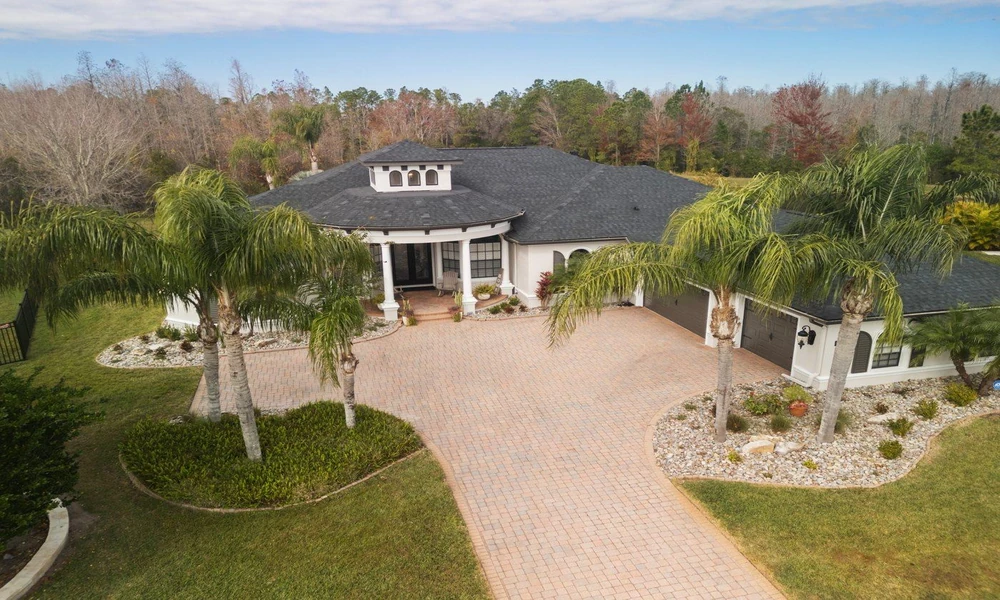
Alt text: Florida home with a newly replaced shingle roof after storm repairs
After a storm, a blue tarp can feel like a relief. The leak stops, the house stays dry, and there’s time to breathe. But a tarp is meant to be a short-term fix. So how long can a tarp stay on a roof before a real repair or replacement has to happen? Many Florida homeowners ask that question.
The honest answer is that it depends on the tarp, the install and the weather. A heavy-duty tarp that’s fastened well, with boards or strips along the edges, can often hold for a few months. A light tarp held down with a few bricks may not last through the next big storm. Florida sun is hard on plastic, and UV rays slowly make tarps brittle. Strong wind can also loosen edges and let water creep under.
A tarp left on too long can cause new problems:
- Water can pool in low spots and leak through.
- Loose edges can flap and damage shingles or tiles around them.
- Trapped moisture can lead to mold or rot in the roof deck.
- Some insurers may question damage that spread while a roof stayed tarped for a long time.
That’s why it helps to treat a tarp as a bridge to the next step. Homeowners should check it after every storm and look for tears, sagging or lifted edges. If it’s damaged, it should be replaced or re-secured right away.
The best plan is to schedule a full inspection soon after the tarp goes up. A roofer can tell whether the roof needs a repair or a full replacement and how soon the work should happen. It’s also smart to photograph the damage and the tarp, keep any receipts, and contact the insurance company early.
In short, a tarp buys time, not a long-term solution. The sooner the roof is properly fixed, the less risk there is of hidden water damage.
This post was written by a professional at Coastal Brothers Roofing. Coastal Brothers Roofing is a family-owned Tampa roof installation company offering expert re-roofing and repair services. They install premium shingles, tile, metal, and low-slope systems, including Tamko and Owens Corning products. Their team also provides gutter, soffit, fascia, and emergency tarping, and they deliver durable, high-quality roofing built for Florida’s climate.