

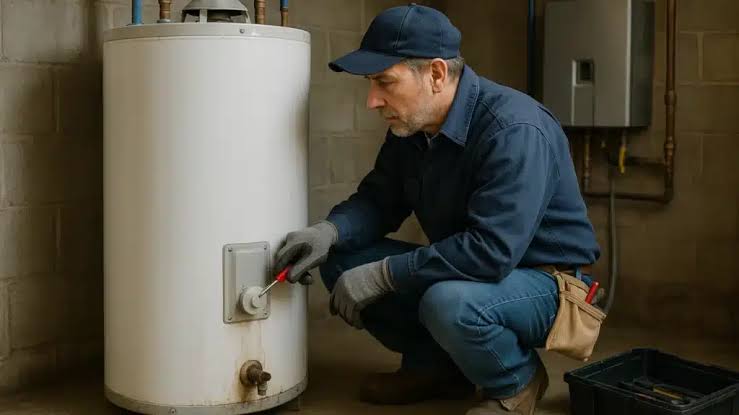
A trickling shower is one of those household annoyances that tends to get blamed on everything except the actual cause. People fiddle with showerheads, complain about the council water supply, or just assume it’s “an old house thing” and learn to live with it. In a lot of New Zealand homes, though, weak hot water pressure comes down to something much more specific: the type of hot water cylinder feeding the system.
Before assuming a new cylinder is the fix, it’s worth understanding what’s actually going on — because sometimes it is the cylinder, and sometimes it’s something else entirely.
Ruling Out the Other Usual Suspects
Weak pressure isn’t always a cylinder issue. Partially closed stopcocks, a build-up of scale or sediment inside old pipework, an undersized showerhead, or a fault somewhere in the council supply line can all produce the same symptom — a shower that feels underwhelming compared to what you’d expect. If pressure is weak on both hot and cold taps throughout the house, the problem is more likely sitting upstream of the cylinder altogether, somewhere in the incoming supply or the general pipework. A quick way to narrow it down is to compare a cold tap against the hot tap right next to it — if they feel roughly even, the cylinder probably isn’t the culprit.
But if the cold tap runs fine and strong, and it’s specifically the hot water that’s disappointing — especially if that mismatch gets worse the more taps or showers are running at once — the cylinder itself is a reasonable place to start looking.
The Cylinder-Type Explanation
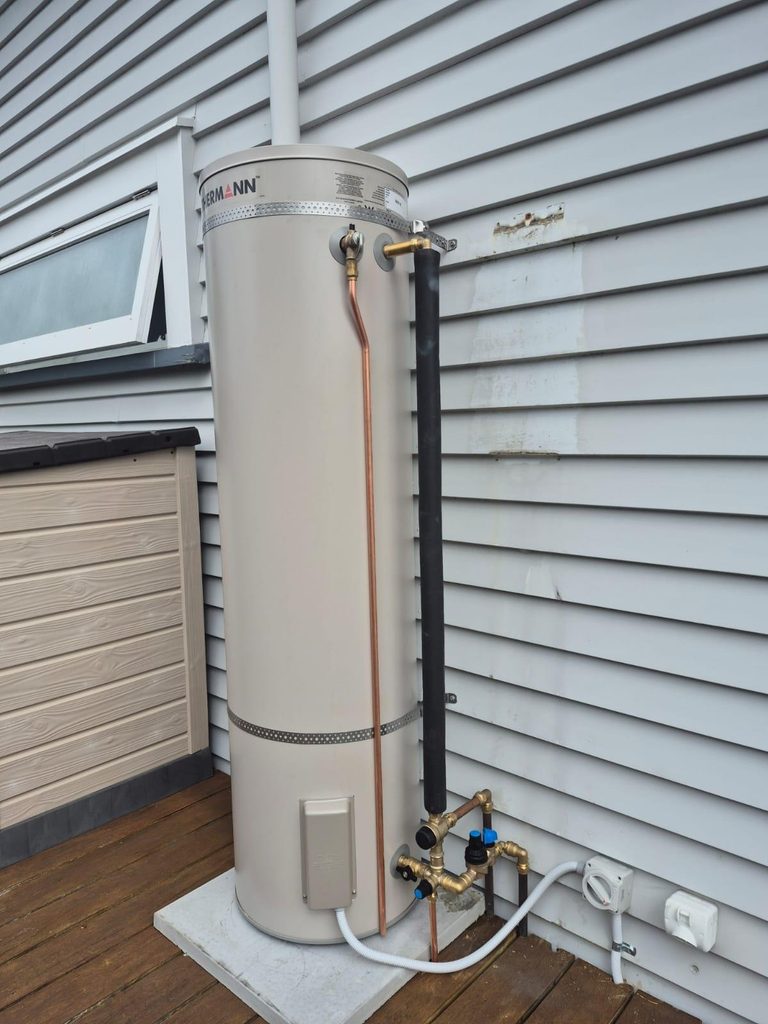
A modern cylinder installed in a tight indoor space.
This is where the low-pressure versus mains-pressure distinction actually matters to someone who isn’t renovating or building — it explains a symptom they’re already living with.
A low-pressure cylinder is generally fed by a header tank, often located in the roof space, and relies on gravity to push water down to the outlets. The pressure it delivers is a function of how high that tank sits above the taps and showerhead — there’s a physical ceiling on how strong the flow can ever be, no matter what showerhead or mixer you fit downstream. This is very normal in older New Zealand homes, particularly villas, bungalows, and houses that haven’t had a full plumbing overhaul, and for a long time it was simply how most hot water systems worked. It isn’t a fault — it’s the system doing exactly what it was designed to do.
A mains-pressure setup instead draws on the same pressure as the street supply, which is why homes with a hot water cylinder mains pressure system generally deliver noticeably stronger, more consistent flow, and cope far better when two showers, or a shower and a dishwasher, are running at once. If your home has one cylinder feeding several bathrooms and everyone notices the shower drop off the moment someone runs a tap elsewhere, that’s a classic mains-pressure-versus-low-pressure symptom.
How to Tell Which One You Have
A few rough clues can point you in the right direction before you even call anyone. A header tank sitting in the roof space above the hot water cylinder is a strong sign of a low-pressure system. If your hot water pressure noticeably drops when another tap or the toilet is used elsewhere in the house, that’s consistent with a gravity-fed setup reaching its limit. If the home has had recent major plumbing work or is a newer build, and the shower pressure feels strong and consistent regardless of what else is running, it’s more likely already on mains pressure — meaning the weak-pressure problem lies elsewhere, and is worth chasing down before spending money on a new cylinder that wouldn’t actually fix it.
None of this replaces an actual inspection. A registered plumber can test your incoming pressure, check the cylinder and its fittings, and confirm which system you’re on and whether it’s operating the way it should.
When Replacing the Cylinder Actually Makes Sense
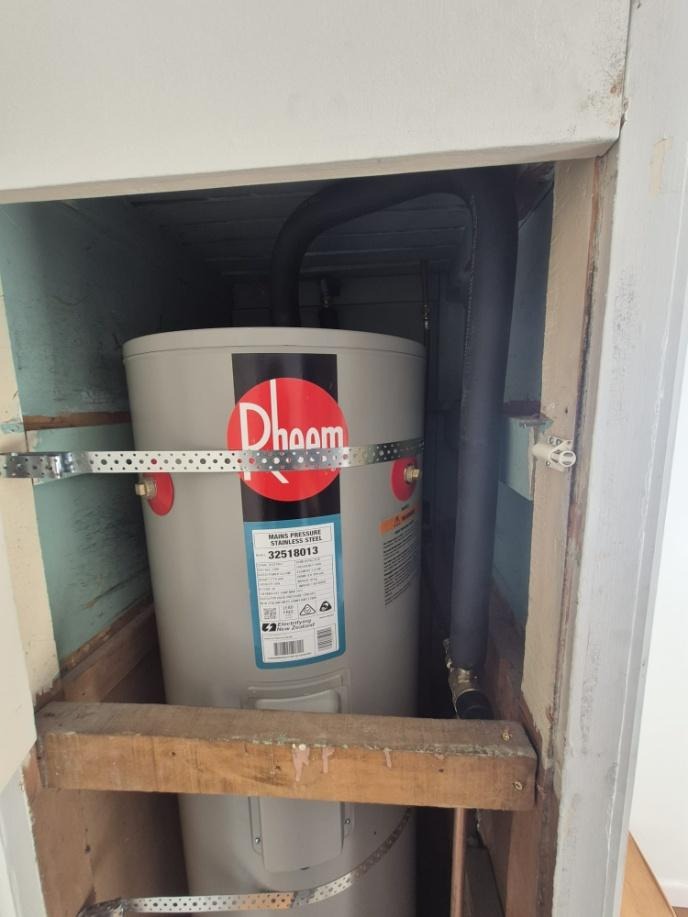
An outdoor mains-pressure cylinder installation.
If a low-pressure system genuinely is the bottleneck and the household wants stronger, more consistent hot water, replacing the cylinder with a mains-pressure unit is often the fix — but it’s worth going in with realistic expectations about what’s involved. It typically isn’t a like-for-like swap: the pipework feeding a mains-pressure cylinder needs to be rated for it, the header tank arrangement is no longer needed and is often removed, and there can be additional fittings and safety valves required that a low-pressure system doesn’t use. That generally makes it a more involved and more expensive job than replacing an old cylinder with an equivalent low-pressure one, largely due to the extra pipework and compliance requirements — but for households tired of weak showers and multiple bathrooms competing for hot water, it’s often worth it.
On the other hand, if the existing low-pressure system is otherwise doing its job and the household doesn’t run multiple bathrooms simultaneously, a straightforward low pressure hot water cylinder replacement can be the simpler, less disruptive, and more cost-effective option when an old unit finally reaches the end of its life. Cylinder brands sold in New Zealand — Rheem, Thermann, Rinnai, Apricus, and Haier among them — offer models across both system types, so there’s no shortage of options either way.
Get an Actual Assessment Before Deciding
Pressure requirements, pipework standards, and any consent obligations differ from property to property, so this is one of those situations where a phone call genuinely beats a guess. A registered plumber or gasfitter can measure your actual incoming pressure, inspect the existing cylinder and pipework, and tell you plainly whether switching systems would solve the problem you’re experiencing — or whether the weak shower you’ve been putting up with has a simpler, cheaper cause altogether.