

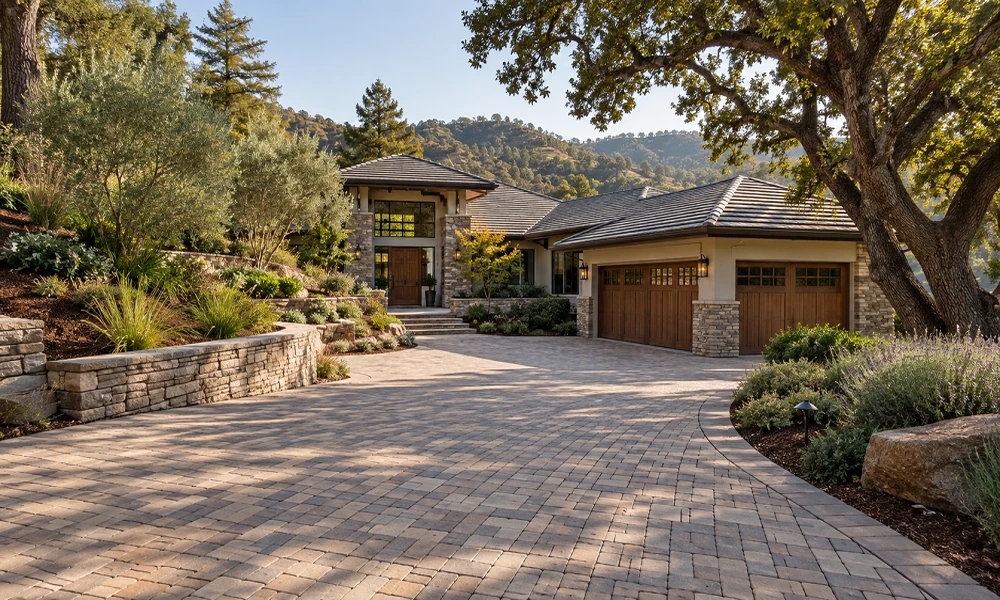
A well-designed outdoor surface can change how a home looks, feels, and functions. From creating a comfortable backyard gathering space to improving the approach to a garage, pavers give homeowners considerable freedom to combine practical hardscaping with architectural character.
In Orinda, however, successful projects require more than choosing an attractive paving stone. The terrain, drainage, intended use, base preparation, and overall design all influence how the finished surface performs. Planning these details before construction begins can make the difference between a hardscape that looks attractive when new and one designed for long-term use.
Start With the Purpose of the Space
The first step in any paver installation is deciding exactly what the new surface needs to accomplish.
A backyard patio might be designed around dining, entertaining, an outdoor kitchen, or a quiet seating area. A driveway has different priorities because it must accommodate repeated vehicle traffic while complementing the home’s entrance.
These differences affect everything from layout to foundation preparation.
For paver patios, homeowners can consider how furniture will be arranged, where people will naturally walk, how the patio connects with doors and pathways, and whether features such as a fire pit or outdoor kitchen might eventually be added.
With paver driveways, planning should consider vehicle movement, garage access, transitions to the street, drainage, borders, and the visual relationship between the driveway and the home’s architecture.
Thinking about everyday use before selecting materials helps create an attractive project without sacrificing practicality.
Design Pavers Around the Home
One of the advantages of paving stones is the range of design possibilities available. Different sizes, textures, colors, laying patterns, and borders can produce anything from a traditional appearance to a clean contemporary finish.
Rather than selecting a paver simply because it looks appealing in isolation, homeowners should consider the entire property.
Roof colors, exterior finishes, retaining walls, landscaping, and other hardscape surfaces can provide useful design cues. The goal does not necessarily have to be an exact match. Complementary tones and textures can often create a more natural result.
Scale matters as well. Larger-format paving stones may work beautifully with some contemporary properties, while more detailed patterns can add character to traditional landscapes.
A knowledgeable paver installer can help translate these individual choices into a cohesive layout rather than treating the paving surface as a separate design element.
Pay Close Attention to Drainage and Grading
Drainage deserves particular attention when planning hardscaping in Orinda.
The City of Orinda has specific drainage and grading requirements that may apply depending on a project’s location, slope, excavation, fill, and relationship to watercourses. Certain projects on developed parcels with significant slopes can also be subject to hillside grading requirements. Homeowners should therefore determine whether permits or additional review apply to their particular property before construction begins.
Good drainage planning is also important regardless of permitting requirements. Water should move in a controlled direction rather than collecting against a house, creating persistent puddles, or flowing where it can contribute to erosion.
This is one reason grading is an important part of professional installation. According to Viking Pavers’ published installation process, grades are established for drainage before the paving stones are installed, with provisions for elements such as drainpipes and downspout connections when appropriate.
For an Orinda property with changes in elevation, this preparation can be just as important as the pavers visible at the surface.
What Happens Beneath the Pavers Matters
A finished patio or driveway may draw attention because of its pattern and color, but much of its performance depends on layers homeowners never see again after construction.
Professional installation generally involves excavation and preparation of the underlying area before the paving stones are placed. Viking Pavers describes a process that includes removing unstable material, establishing grades, installing geotextile fabric, adding a Class II base, compacting the foundation, and placing bedding sand before laying the individual stones.
The requirements also differ according to the intended use. A driveway carrying vehicles places greater demands on its foundation than a pedestrian patio.
Cutting and edge treatment matter too. Properly fitted perimeter stones and restraints help maintain the shape of the paved area, while compaction and joint material contribute to the interlocking system.
For homeowners comparing a paver company, asking how the contractor prepares the foundation can therefore be more revealing than focusing exclusively on the paving stone itself.
Plan Patio Features Before Construction
A patio often becomes an extension of the home’s living area, so it is useful to think beyond the immediate paving project.
Consider where a dining table, lounge furniture, grill, fire feature, or outdoor kitchen could eventually sit. Even when some features will be added later, anticipating them can help determine the right patio dimensions and circulation routes today.
Lighting and landscaping should also be considered early. Planting beds can soften hardscape edges, while pathways can provide comfortable transitions between the patio, driveway, garden, and other areas of the property.
The result should feel intentional rather than like individual outdoor improvements were added one at a time.
Think About the Driveway as Part of the Landscape
Because a driveway occupies a substantial portion of many front yards, replacing it can have a noticeable effect on curb appeal.
Paving stones allow homeowners to introduce patterns, borders, and contrasting details that define the driveway without overwhelming the house. A border, for example, can create a finished edge and visually connect the driveway with walkways or entry paving.
Durability remains the priority. Vehicle areas require careful excavation, base construction, compaction, edge restraint, and installation. A skilled paver contractor should plan the driveway as a structural surface first and then refine its appearance through material and pattern choices.
Choosing a Paver Contractor in Orinda
Before construction, homeowners should discuss the entire project scope rather than requesting a price based only on square footage. Site access, demolition, excavation, drainage, grading, foundation preparation, paving materials, borders, and cleanup can all influence the work involved.
When selecting a paver contractor, Orinda homeowners can also ask to see examples of completed patios or driveways and discuss how the installer approaches challenging grades and drainage conditions.
Viking Pavers provides paver installation services in Orinda and describes a multi-stage installation method covering excavation, grading, geotextile fabric, base preparation, compaction, bedding sand, paving stones, edge work, polymeric joint sand, and final compaction.
Understanding these construction details gives homeowners a better basis for comparing proposals from any paver contractor.
Build the Project Around Long-Term Use
A successful paving project brings together design and construction rather than treating them as separate decisions.
The color and pattern create the first impression, but appropriate grading, drainage, excavation, base preparation, compaction, and edge restraint help determine how the surface performs over time.
For Orinda homeowners, planning the complete project before installation also provides an opportunity to coordinate patios, driveways, pathways, landscaping, and future outdoor features. With thoughtful design and experienced installation, a new hardscape can become a natural extension of the property instead of simply a replacement surface.
FAQs
What should homeowners plan before installing pavers?
Homeowners should consider the intended use of the area, dimensions, traffic, drainage, grading, paver style, borders, landscaping, and any future outdoor features before installation begins.
Are patio and driveway pavers installed the same way?
They share many installation principles, but driveways must be prepared for vehicle loads. Foundation depth and other construction requirements can therefore differ from those of pedestrian areas.
Why is base preparation important for paver installation?
The prepared base provides the foundation beneath the visible paving stones. Proper excavation, grading, and compaction help create a stable surface and support long-term performance.
Do paver projects in Orinda require permits?
Requirements depend on the individual project. The City of Orinda identifies circumstances in which drainage, grading, or hillside grading requirements can apply, so homeowners should confirm requirements for their property and proposed scope before work begins.
Can a paver patio be designed for future outdoor features?
Yes. Planning for features such as outdoor kitchens, fire features, seating areas, pathways, and landscaping can make future additions easier to integrate.