

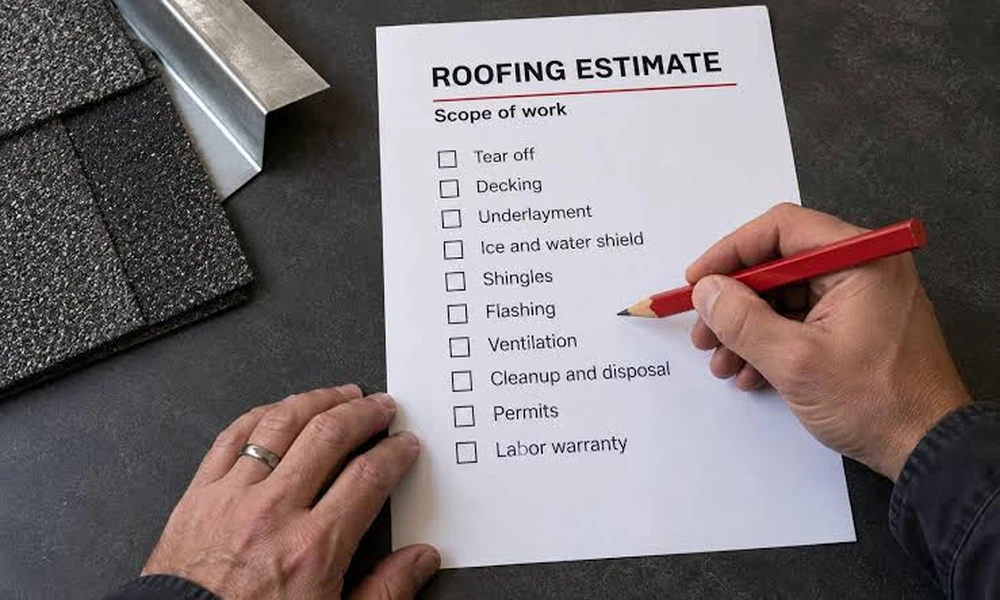
A roofing estimate can look like a wall of numbers at first glance. One bid fits on half a page, another runs to three, and the totals may differ by thousands of dollars even though both promise “a new roof.” Most of that gap comes from what each contractor chose to include, leave vague or skip entirely.
Learning to read those documents is one of the most useful things a homeowner can do before signing anything. Every line represents a material, a labor step or a protection, and knowing what each one does makes it far easier to compare bids fairly instead of simply picking the lowest number.
Homeowners in Midland, Odessa and smaller West Texas towns such as Seminole, Andrews and Big Spring often gather bids from regional firms like Schmitt Roofing & Construction, which works on asphalt shingle, metal and tile roofs as well as storm damage repair and offers free inspections. Whoever ends up doing the work, the breakdown below explains what a complete estimate should cover.
Reading the Main Sections of a Bid
Measurements and Waste
Roofers price by the “square,” which equals 100 square feet of roof surface. A typical estimate lists the total squares plus a waste factor, usually somewhere between 10 and 15 percent. Simple gable roofs need less extra material, while hip roofs with many valleys produce more cutoffs. If two bids list very different square counts for the same house, one of them measured incorrectly, and that is worth asking about.
Tear Off and Disposal
Removing the old roof is real labor, and it should appear as its own line. Look for the number of layers being removed, since a second hidden layer adds weight to haul away and time to strip. Disposal covers the dumpster or trailer. A good bid also mentions a magnetic sweep of the yard and driveway to collect stray nails.
Decking Replacement
Nobody can see the plywood or OSB under the shingles until the old roof comes off. Careful estimates handle this uncertainty with a per sheet price for any rotted or soft decking found during tear off. A bid that says nothing about decking leaves room for an unpleasant surprise on the final invoice. A bid with a clear per sheet rate lets the homeowner calculate the worst case ahead of time.
Underlayment and Edge Metal
Underlayment sits between the deck and the roofing material as a second line of defense against water. Estimates should name the type, such as synthetic or traditional felt. Drip edge, the metal strip along the eaves and rakes, is required for asphalt shingles under the International Residential Code, so its absence from a bid is a red flag rather than a savings.
Flashing and Accessories
This group causes more leaks than any other part of a roof. Step flashing along walls, chimney flashing, valley treatment and pipe boots all deserve their own mention. It is reasonable to ask whether existing flashing will be reused or replaced, because new shingles paired with tired old metal rarely last as long as they should. Starter strips and ridge caps belong here too.
Ventilation
Attic ventilation affects shingle lifespan and indoor comfort, especially through long West Texas summers. A thorough bid states which vents will be installed or replaced, whether ridge vents, box vents or turbines, and ideally explains how intake at the eaves balances exhaust near the peak.
Lines Worth Looking for Before Signing
Some items are easy to overlook because they are missing rather than wrong. A complete estimate usually addresses:
- The exact product name, color and impact rating of the roofing material
- A per sheet price for decking replacement
- Permit fees and who is responsible for pulling the permit
- Cleanup, including nail sweeps and protection for landscaping
- Workmanship warranty length, stated in writing
- Manufacturer warranty level, since some enhanced coverages require a certified installer
- A payment schedule tied to completed stages rather than dates
When a bid skips several of these, it is not necessarily dishonest. It may just be incomplete. Either way, asking the contractor to add the missing lines turns a vague number into something that can be compared side by side with other offers.
Permits, Registration and Payment Terms
Roof replacement is not just a material decision. It is also regulated work. The City of Midland notes on its building permits page that residential permits apply to repairs and remodeling, and that most construction projects require a licensed and bonded contractor registered with the city. Checking that registration before work starts takes only a few minutes and helps separate established firms from crews that arrive after storms and leave just as fast.
Payment terms deserve the same attention. A modest deposit for materials is common, but very large upfront demands are a warning sign. The Federal Trade Commission’s guide on how to avoid a home improvement scam recommends never making the final payment until the work is finished and the homeowner is satisfied, along with getting everything in writing.
Insurance claims add one more layer. Texas law bars contractors from waiving or absorbing a homeowner’s insurance deductible, so any bid that promises to “cover” the deductible should be treated with caution. A legitimate estimate for an insurance job should line up with the adjuster’s scope, and any supplemental items, such as hidden decking damage, should be documented with photos.
Comparing Bids Without Getting Lost
Once two or three estimates are complete, laying them next to each other becomes much easier. The goal is not to find identical numbers but to understand why they differ. One contractor may include premium underlayment and new flashing while another assumes reuse. One may price decking generously while another leaves it out entirely.
The lowest total often looks attractive until those gaps are filled in. After everything is accounted for, the gap between bids frequently shrinks, and the decision can rest on product quality, warranty strength and how clearly the contractor explained the work.
A roof is one of the largest exterior investments a household makes, and it protects everything underneath it. Taking an hour to read each estimate carefully, asking about anything unclear and confirming permits and registration puts the homeowner in control of the project from the very first conversation. That hour often saves far more than it costs.