

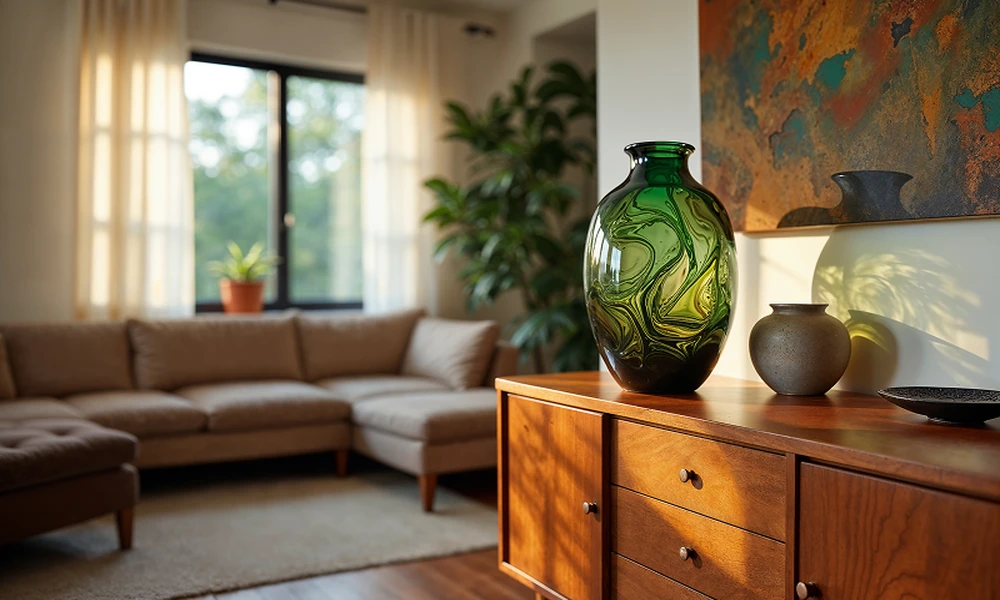
A home can feel carefully designed without relying on excessive decoration. Mid-century modern interior design is recognised for its emphasis on clean forms, practical layouts, natural materials and furniture with clear visual structure. These qualities can create a balanced interior while leaving enough room for everyday living.
For homeowners exploring different interior design styles, the appeal of this approach often comes from its ability to combine function with character. Rather than filling a room with decorative pieces, the design gives greater attention to proportion, material, shape and the relationship between furniture and open space.
1. Clean and Simple Lines
One of the most recognisable characteristics of mid-century modern design is the use of clean lines. Furniture tends to have straightforward silhouettes, while architectural elements can remain visually uncluttered.
This approach can help a room feel organised without making it appear overly sparse. Sofas, cabinets and tables may feature tapered legs, simple frames or carefully proportioned surfaces. The goal is not to remove personality but to avoid unnecessary visual complexity.
When considering this style at home, think about how each major item contributes to the overall composition. A few well-chosen pieces can establish a stronger visual direction than a room filled with unrelated furniture.
2. Natural Materials
Timber plays an important role in many mid-century interiors. Wood can introduce warmth to spaces that feature clean architectural lines and restrained decoration.
You can use timber through furniture, flooring, shelving or smaller decorative elements. The material does not need to dominate the room. Even a timber sideboard or coffee table can introduce the warmth needed to soften a more structured space.
Natural materials can also work across different interior design styles, making them useful for homeowners who want a mid-century influence without committing to a fully themed interior.
3. Functional Furniture
Mid-century modern furniture generally places practical use alongside appearance. A chair should be comfortable, a storage unit should serve a clear purpose and a dining table should support everyday activities rather than simply act as a visual feature.
This focus can be useful for modern households where rooms may serve several functions. A streamlined sideboard can provide storage without taking up unnecessary visual space, while an appropriately sized lounge chair can create a reading area without overwhelming the room.
Consider how furniture will be used throughout the day before selecting pieces based purely on appearance.
4. Balanced Proportions
Proportion can determine how successfully a room comes together. A large sofa paired with several small tables may create an unbalanced composition, while oversized furniture can make a compact room feel restricted.
Measure the available area before purchasing major pieces. Pay attention to walking routes, door openings and the distance between furniture items.
The principles associated with mid-century modern interior design can work particularly well when proportion remains a priority. Clean furniture forms become more noticeable when surrounding space allows them to breathe.
5. Controlled Colour
Mid-century interiors can include colour, although the overall palette tends to remain deliberate. Neutral walls can provide a foundation for timber furniture, while selected chairs, artwork or accessories can introduce stronger shades.
The important point is consistency. Too many competing colours can weaken the clean visual structure of the room. Instead, choose a small palette and repeat selected tones through furniture, textiles and decorative details.
Colour can also help define different areas in an open-plan home without relying heavily on partitions.
6. Thoughtful Lighting
Lighting should support the structure of the room. Pendant lights, floor lamps and table lamps can become functional features while adding visual interest.
Consider the different activities taking place in each area. A dining table may need focused lighting, while a lounge area may benefit from softer ambient illumination.
When selecting fixtures, look for shapes and materials that complement the furniture rather than competing with it. This creates a more cohesive result and allows lighting to become part of the design language.
Style Breakdown
| Feature | Design Role | Practical Benefit |
| Clean lines | Creates visual order | Reduces clutter |
| Timber | Adds warmth | Works across rooms |
| Functional furniture | Combines form and use | Supports daily routines |
| Proportion | Maintains balance | Improves movement |
| Controlled colour | Adds character | Creates cohesion |
| Lighting | Defines atmosphere | Supports activities |
Contact Hoft Interior to discuss how mid-century modern principles can be adapted to your home’s layout, furniture requirements and preferred interior direction.