

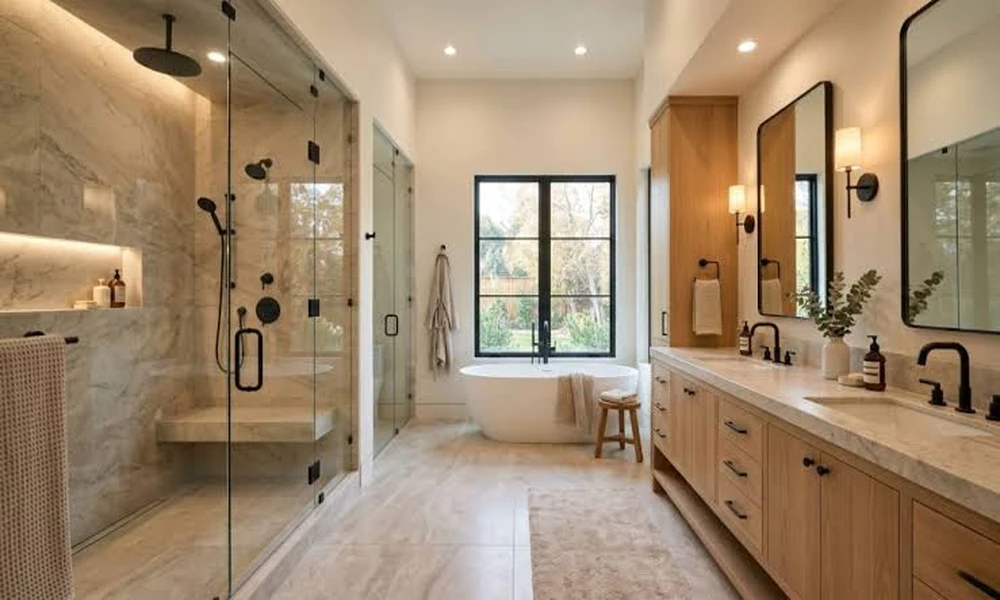
Homeowners planning a remodel almost always ask the same question first: which room gives the better return, the kitchen or the bathroom? The honest answer is that it depends less on the room and more on how outdated the current one looks compared to what buyers in your market now expect.
Why the Kitchen Usually Wins, But Not Always
Kitchens tend to top most remodeling ROI studies because they’re the room buyers scrutinize hardest during a walkthrough. Cabinets, countertops, and layout all signal how well the rest of the house has been maintained, fairly or not. A kitchen that looks like it hasn’t been touched since the 90s can quietly knock a home out of consideration before a buyer even sees the rest of the house.
That said, a kitchen that’s already reasonably updated doesn’t need the same investment as one that’s genuinely dated. In that case, a bathroom that’s original to the house, especially a primary bathroom, can offer a better return simply because it has more room to improve relative to what it costs.
The Upgrades Worth the Money
Not every renovation dollar returns the same value. In kitchens, replacing cabinet fronts and hardware, updating countertops, and improving lighting tend to outperform a full gut renovation in terms of cost-to-value ratio, unless the layout itself genuinely doesn’t work. In bathrooms, replacing an old tub with a walk-in shower, updating vanities, and improving ventilation to prevent moisture problems consistently rank among the highest-return changes.
Where people tend to overspend is on highly personalized finishes, unusual tile choices, or specialty fixtures that reflect a specific taste rather than broad appeal. These can make a space feel more like home while you’re living in it, but they rarely add dollar-for-dollar value when it’s time to sell.
The South Florida Factor
In humid coastal climates, moisture-resistant materials aren’t just a nice-to-have. Cabinets, flooring, and drywall in kitchens and bathrooms need to hold up against humidity swings that homes in drier climates never have to deal with. Cutting corners on moisture-resistant materials to save money upfront tends to show up later as warping, mold, or swelling, which costs far more to fix than it would have to do correctly the first time.
A Simple Way to Decide
Walk through both rooms and ask which one a buyer would notice first and react to more strongly. If both are close, prioritize whichever one currently has a functional problem, like inadequate storage, poor lighting, or plumbing issues, since fixing an actual problem usually returns more value than upgrading something that already works fine.
Whichever room comes first, working with a licensed, insured contractor who specializes in kitchen and bathroom remodeling can help protect the investment either way. Unpermitted work is one of the most common issues that surfaces during a home inspection, and it can complicate a sale even years after the renovation is finished.