

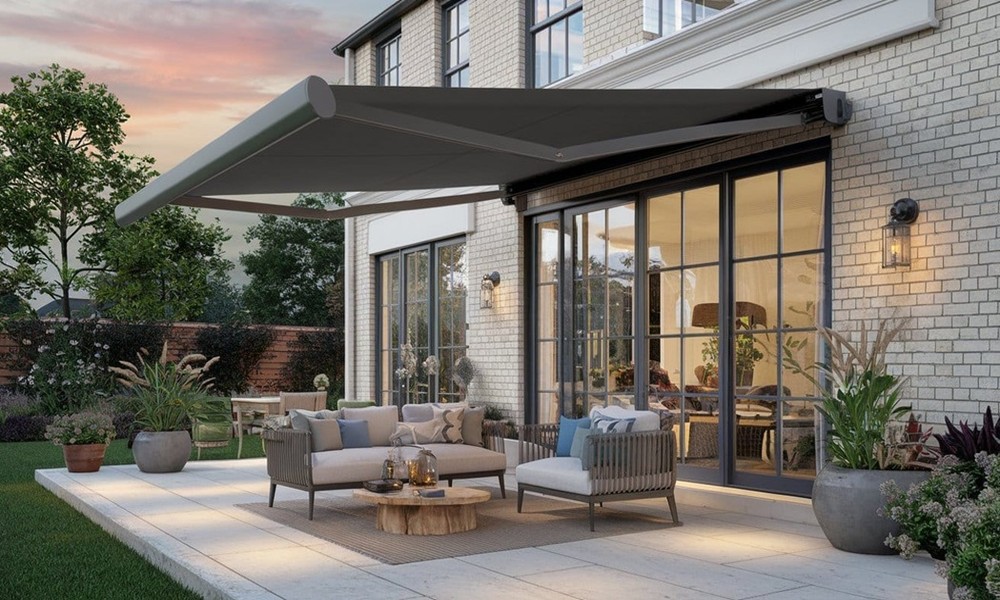
An outdoor awning in Singapore is one of the more straightforward investments a homeowner can make in the quality of their outdoor life. The premise is simple: shade and rain protection convert a space that is uncomfortable or unusable in Singapore’s climate into one that works through most of the day and most of the year. The variety of solutions available, from motorised retractable fabric awnings to fixed polycarbonate roofing to louvred pergola systems, means that the right answer for a specific space and a specific set of requirements can be found within a broad and competitive market.
Starting with the Right Questions
Before any product type is considered, defining what the outdoor space is for and what is currently limiting its use produces a more useful starting point than browsing awning catalogues.
Most homeowners in Singapore find their outdoor terrace or balcony is limited by two conditions: it is too hot during the day to use comfortably from mid-morning to late afternoon, and it gets wet during rain and takes time to dry before it is usable again. Some spaces face additional constraints: glare, wind-driven rain on the sides, or an unpleasant view or lack of privacy in a particular direction.
A space that is primarily restricted by heat and direct sun during dry weather benefits most from a solution that provides shade while allowing air movement. A retractable fabric awning, a louvred roof system, or a fixed frame with breathable fabric are all appropriate. A space that also needs to remain usable during rain needs a waterproof cover: polycarbonate, glass, or a water-resistant fabric awning with sufficient slope to run rain off quickly.
Privacy or wind issues on the sides are solved with roller blinds or screen panels that attach to the side of the awning frame. These can be retractable for maximum flexibility or fixed for permanent screening.
Fixed vs Retractable: The Central Design Decision
Fixed outdoor awning structures are permanently in place. They require no daily operation, they provide protection regardless of whether anyone is home, and they are structurally more robust in wind than most retractable systems. The limitation is that the covered space is always covered. When the weather is perfectly pleasant and you would prefer an open sky, the fixed cover is still there.
Retractable awnings address this by giving you the option to extend or retract on demand. They require operational discipline: an awning left extended in a storm can be damaged by wind or by the weight of accumulated water. A motorised system with a wind sensor automates the retraction decision, which reduces but does not eliminate this risk.
For most Singapore balconies and terraces that face south or west and receive direct afternoon sun, a fixed polycarbonate or glass roof provides the most reliable daily functionality and requires the least ongoing management.
“A home that works with where it is, rather than despite where it is, is a home that serves its family well.” – Lim Kim San, former Singapore Minister for National Development.
Materials for Singapore’s Conditions
Every material used in an outdoor structure in Singapore must perform reliably under UV radiation, humidity, and rain. These conditions are more demanding than those in temperate climates, which means products adequate for European or North American markets may not perform to the same standard here.
Aluminium frames are the standard for all outdoor awning structures in Singapore. They resist corrosion, handle the thermal expansion and contraction of the climate without distortion, and are light enough to be supported without excessive structural burden. Powder-coated finishes protect the aluminium surface and maintain their appearance for ten or more years with normal maintenance.
Polycarbonate roofing panels in UV-stabilised grades maintain their clarity and structural integrity for ten to fifteen years under Singapore’s solar intensity. Without UV stabilisation, polycarbonate yellows and becomes brittle within three to five years.
Solution-dyed acrylic fabrics for retractable awnings resist fading and mould in conditions where lesser fabrics fail within two or three seasons. The colour-fast properties of solution-dyed acrylic are specifically relevant in Singapore’s combination of UV intensity and humidity.
Choosing a Contractor
A contractor who has installed outdoor shade Singapore solutions across a range of property types in Singapore brings specific knowledge that generic builders do not: familiarity with HDB and MCST approval requirements, knowledge of which materials perform well here over time, experience with drainage design in high-rainfall conditions, and relationships with suppliers of materials that are appropriate for tropical climates rather than temperate ones.
Request to see examples of completed work. Visit an installation if possible. A structure in its third or fifth year of service tells you more about material quality and installation standard than a showroom sample or a photograph taken immediately after installation.
Verify the warranty coverage before signing any contract. Quality awning contractors warrant both the materials and the workmanship for a defined period. The warranty period should be at least three years for workmanship and reflect the manufacturer’s warranty for the materials used.
An outdoor awning solution chosen thoughtfully, installed properly and matched to the specific conditions of the space becomes a feature that household members use every day without thinking about it, which is the measure of outdoor design that has genuinely succeeded.