

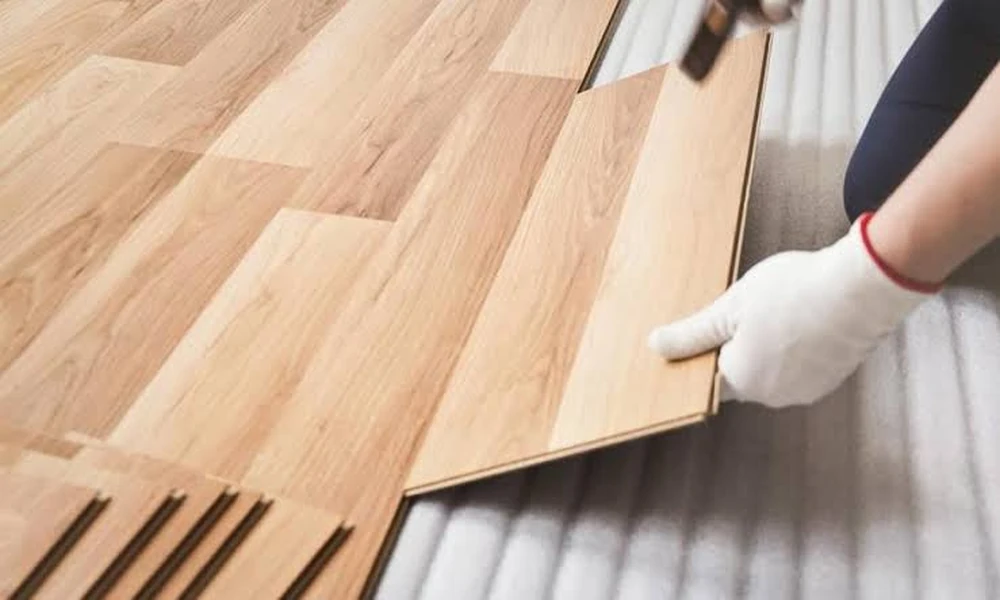
Dreaming of a fresh new floor without watching your renovation budget disappear beneath your feet? Laminate flooring could be worth considering. With its wide choice of wood-inspired designs and relatively straightforward installation, it can give Toronto and North York homes a fresh look without the price tag associated with some other flooring options.
But there’s a catch: the price displayed on a flooring sample rarely tells the whole story. Before you calculate your budget and declare victory, let’s look at the costs that can sneak into a flooring project.
1. Start With the Price Per Square Foot
Laminate flooring prices vary according to thickness, surface design, durability specifications, construction, and brand. Some products imitate the grain and texture of natural wood convincingly, while others offer simpler finishes at lower prices.
Think about how the room will be used. A busy family living room has different demands from a guest bedroom that sees visitors twice a year. Compare product specifications and manufacturer recommendations rather than assuming that the cheapest option will deliver the best value.
Next, measure your room. A 300-square-foot space might require around 330 square feet of flooring if you allow 10% extra for cutting waste. The actual allowance depends on the room’s shape and layout.
That extra material affects your budget, so calculate it before comparing prices. Nobody wants to discover halfway through installation that the final corner requires three more planks and a minor financial miracle.
2. Factor In Installation Labour
Many laminate products use click-lock systems, but installation still requires accurate measuring, cutting, and fitting.
A large, open room may be relatively simple to complete. Multiple doorways, narrow passages, awkward corners, and transitions between rooms can add time to the job.
Ask whether your installation quote includes cutting, fitting, transitions, and finishing details. Confirm whether furniture removal, baseboard work, and door adjustments are included or charged separately.
Two contractors may quote different prices for perfectly reasonable reasons. The important thing is to understand what each price covers before choosing the apparent bargain.
3. Check What’s Beneath the Existing Floor
Your new laminate needs a suitable surface underneath it. If the subfloor is uneven, damaged, or affected by moisture, preparation may be necessary before installation.
Some laminate products require a separate underlay, while others have an attached backing. The correct arrangement depends on the flooring system and the manufacturer’s instructions. Adding extra materials without checking requirements can waste money; skipping necessary materials can create problems later.
For older Toronto and North York homes, it is worth asking whether the contractor has inspected the existing floor and whether preparation costs are included.
A smooth, attractive finish starts with a suitable foundation. Unfortunately, the subfloor doesn’t become level simply because the new flooring is expensive.
4. Don’t Forget the Extras
The flooring and installation aren’t necessarily your only expenses. Depending on the project, you may also need:
- Underlay or moisture-control materials: Where required by the product and site conditions.
- Transition strips and trims: To finish doorways and changes between flooring surfaces.
- Baseboard work: Existing trim may need removal, replacement, or reinstallation.
- Old flooring removal: Particularly relevant when replacing carpet, laminate, or other existing materials.
- Disposal and delivery: Costs can depend on the amount of material and property access.
- Applicable taxes: Check whether they are included in the quotation.
Not every home requires every item. Ask for a breakdown so you know which expenses apply rather than discovering the missing pieces after work begins.
5. Compare Complete Quotes, Not Tempting Headlines
LV Flooring’s guide to laminate flooring installation costs is a useful starting point when planning your project.
When requesting quotes, compare the same product, material quantity, installation scope, preparation, and finishing work. Ask about exclusions and how unexpected repairs will be priced.
You can often control costs by choosing a suitable product, keeping the layout straightforward, and clearing the room beforehand where practical. However, avoid cutting corners on necessary preparation just to make the initial estimate look prettier.
Final Thoughts
Laminate flooring can be a practical way to refresh your home, provided you budget for the complete job rather than the planks alone.
Measure carefully, allow for waste, check the subfloor, and compare written quotations that clearly explain what’s included.
A little planning now can save you money and frustration later. After all, the only thing that should be getting floored during your renovation is the room itself-not your budget.