

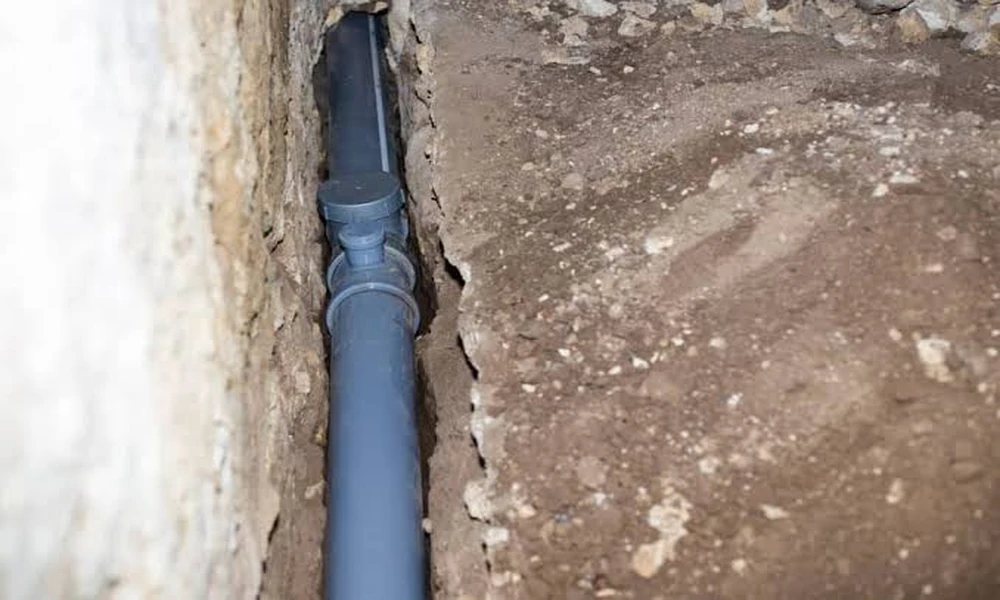
By late August, plenty of Waco lawns develop cracks wide enough to swallow a garden trowel. Most homeowners blame the heat, water the grass and move on. Underneath those cracks, though, the same soil is gripping, squeezing and releasing two of the most important pipes on the property, the water line that feeds the house and the sewer line that carries everything away.
Those two lines rarely get attention until one of them fails, which is why a local crew like Manny’s Plumbing spends so much of its time on main water and sewer work rather than just faucets and toilets. After more than fifteen years of digging in Central Texas yards, the pattern is familiar. The pipe almost never gives out on its own. The ground usually helps it along.
The Ground Under Waco Never Really Settles
Much of McLennan County sits on the Blackland Prairie, where the dominant soil belongs to the Houston Black series. Soil scientists treat it as a textbook Vertisol, a clay so rich in montmorillonite that it swells when it soaks up rain and shrinks hard when it dries. The Texas Water Development Board’s profile of Houston Black points out that this very high shrink and swell behavior is exactly what makes the soil difficult in the metropolitan areas built on top of it.
Federal soil survey descriptions put numbers on the problem. During dry spells, cracks between half an inch and four inches wide can open about a foot below the surface. That depth lines up uncomfortably well with where a water service line usually runs, and the sewer lateral sits only a little deeper. Every wet spring and dry summer nudges the pipe a little. Over twenty or thirty seasons, a little adds up to a lot.
Two Lines That Fail in Different Ways
The water line and the sewer line get lumped together, but they behave nothing alike.
The water service line is pressurized. It runs from the city meter, usually near the curb, to the spot where it enters the house. Because the water inside pushes outward around the clock, even a hairline split leaks constantly. Older homes may still have galvanized steel here, which rusts from the inside out, or early polybutylene, which turns brittle with age. Newer homes tend to have copper, PVC or PEX.
The sewer lateral works by gravity. It needs a steady downhill slope, often around a quarter inch per foot, to carry waste from the house to the city main. It isn’t under pressure, so a crack doesn’t spray. Problems show up instead as slow drains, backups and smells. Clay tile and cast iron dominate older laterals, while PVC is standard in anything built in the last few decades.
That difference matters when something goes wrong. A water line problem usually announces itself through money and moisture. A sewer line problem announces itself through drains and odor.
How Moving Clay Actually Breaks a Pipe
Shrink and swell damage is rarely dramatic. It’s a slow series of pushes, and each one finds a weak point.
- Bellies in the sewer line. When the soil under a stretch of pipe dries and drops, the pipe sags with it. Waste and paper settle in the low spot, and the line starts clogging in the same place again and again.
- Separated joints. Clay tile and older cast iron come in short sections joined at bell fittings. Soil movement pulls those joints apart, opening gaps that leak and invite roots inside.
- Root intrusion. Live oaks, pecans and hackberries are common in Waco yards, and their roots hunt for moisture during drought. A sewer joint that weeps even slightly becomes an easy target.
- Shear at the foundation. Slab homes move differently than the soil beside them. Where a line passes from an open yard under or through the slab, it can be bent, pinched or snapped.
- Point loads from rock and debris. Lines laid without proper bedding can end up resting on a chunk of limestone or leftover construction debris. As the clay presses down, that single point eventually cracks the pipe.
Reading the Yard and the House
Because the lines are buried, the evidence shows up somewhere else. A patch of grass that stays green and spongy in the middle of a dry August deserves a closer look, and so does a stripe of greener grass running from the curb toward the house. A water bill that climbs without any change in household habits is another strong hint.
The water meter offers a simple test that anyone can run in under an hour.
- Shut off every faucet, appliance and irrigation zone in the house.
- Open the meter box and note the position of the small leak indicator, usually a tiny triangle or star shaped dial.
- Wait about thirty minutes without using any water, then check the dial again.
If the dial moved, water is escaping somewhere between the meter and the fixtures, and the service line becomes a prime suspect.
Sewer trouble looks different. Gurgling in a tub when the washing machine drains, a toilet that bubbles on its own, or a backup that appears first in the lowest drain in the house all point toward the lateral. A sewage smell outdoors near the cleanout, or a small sinkhole forming over the pipe’s route, is more urgent still.
Age of the House Shapes the Odds
A home’s construction era says a lot about what lies under the yard. Houses from the early and middle twentieth century in Waco’s older neighborhoods often have clay tile or cast iron laterals that have already lived through decades of clay movement, along with galvanized supply lines nearing the end of their useful life. Ranch homes built after the war frequently have cast iron under the slab and a patchwork of materials in the yard after years of piecemeal repairs.
Newer subdivisions out toward Hewitt, Woodway and China Spring generally have PVC and PEX, which tolerate movement better. They aren’t immune, though. A builder who skimped on bedding or backfill can leave a modern pipe sitting on uneven ground, and the clay doesn’t care how new the pipe is.
What Repair Looks Like Today
The work starts with a camera. A plumber feeds a waterproof camera through the cleanout and records the full length of the sewer line, marking breaks, bellies and root masses with a locator above ground. For water lines, pressure testing and electronic leak detection narrow down the spot before anyone picks up a shovel.
From there, the choice depends on the damage. A single cracked joint might get a spot repair, which means digging one small pit and replacing a short section. A line full of roots and failing joints might suit trenchless replacement, where a new pipe is pulled through the old path by pipe bursting, or a resin liner is cured inside the existing pipe. A line with a serious belly usually needs open trenching, since a liner simply follows the sag it was installed into.
Good repairs also account for the soil itself. That can mean bedding the new pipe in sand or select fill, using flexible couplings at transition points, and sleeving lines where they meet the foundation so the house and the yard can move independently of each other.
Keeping the Clay a Little Calmer
Nobody can stop Houston Black from moving, but homeowners can soften its swings. Steady moisture is the main idea. A soaker hose run along the foundation during long dry stretches helps keep the clay from shrinking sharply, and grading that slopes water away from the house prevents the opposite problem after heavy rain. New trees do best planted well away from the sewer line’s path, and it pays to know where that path actually runs before adding a flower bed or patio on top of it.
An accessible, clearly marked cleanout is worth having as well. When a backup happens at night, a cleanout cap you can find and open makes the difference between a quick visit and a ruined floor. In a place where the ground keeps shifting season after season, the pipes under a Waco yard simply last longer when someone is paying attention to both of them.