

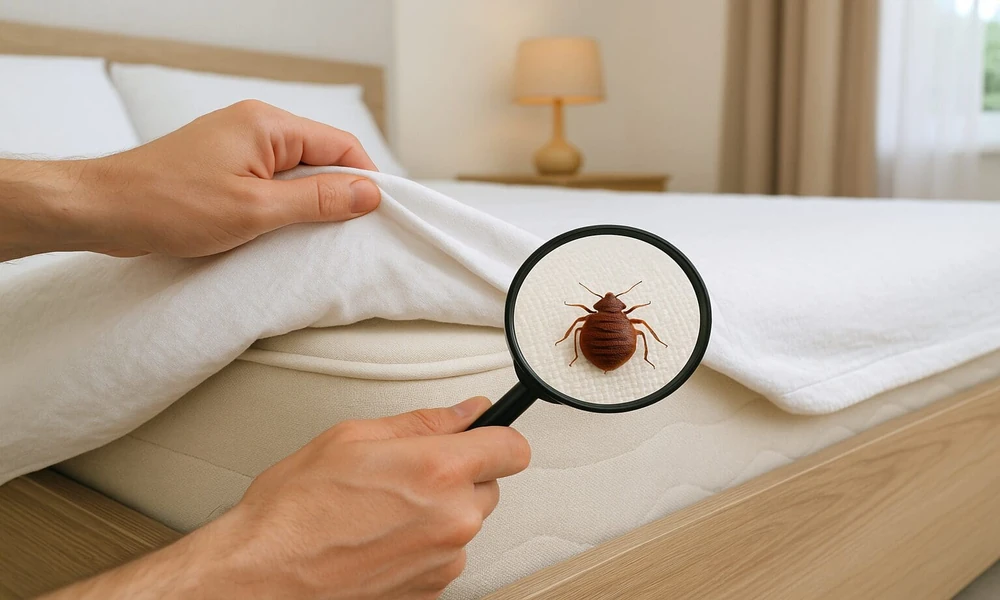
A short-term rental takes on more bed bug risk in a month than a long-term lease takes in a year, because every arriving suitcase is a fresh introduction. Denver hosts running units near the convention center, along the I-70 ski corridor, or in Capitol Hill to see guests from everywhere, and luggage is the primary way bed bugs travel. That exposure is why hosts book Hot Bugz heat treatment for a single overnight block rather than surrendering a calendar to weeks of repeat spray visits. The math is brutal in one direction and manageable in the other.
What does one bed bug report actually cost a Denver host?
Far more than the treatment. A single verified complaint typically triggers a full refund for the current stay, cancellation of upcoming reservations without penalty to those guests, a calendar block while the unit is treated, and a public review that stays attached to the listing indefinitely.
Airbnb and Vrbo both treat a confirmed infestation as legitimate grounds for guest refund and rebooking under their traveler protection policies, so the host absorbs the loss regardless of how the bugs arrived. Run the numbers on your own listing. A unit averaging $200 a night that goes dark for two weeks during peak season loses roughly $2,800 in gross bookings, which is more than most whole-unit heat treatments cost in the Denver market. The review damage outlasts the calendar damage by years.
Where do bed bugs actually hide in a rental unit?
In the sofa bed, more often than anywhere except the primary mattress. Pull-out frames combine fabric, deep folds, metal joints, and a mechanism nobody inspects, and guests use them without mentioning it. Any Denver host with a sleeper sofa should treat it as a second bedroom for inspection purposes.
The rest of the high-probability list runs short and specific:
- Mattress piping and the seam where the box spring frame meets fabric
- The gap behind an upholstered headboard, especially wall-mounted ones
- Luggage racks and the closet shelf where guests set bags down
- Recliner and armchair seams, particularly the underside of cushions
- Nightstand drawer runners and screw holes in wooden bed frames
Decor works against you here. Fabric headboards, throw pillows, layered bedding, and stacks of books all create harborage that a hard-surfaced, minimal room does not.
How should cleaners inspect between guests?
Give them a five-minute protocol and a flashlight, because turnover cleaning is your only real detection layer. Nobody else looks at the unit between guests.
Strip the bed and check the mattress piping and the four corners of the box spring before new linens go on, holding the light at a low angle so eggs and shells catch the shine. Look for dark fecal spotting, which dries as pen-tip dots that bleed into fabric like ink from a felt marker, and for shed skins, which are translucent amber husks shaped like the insect. Run every set of linens through a dryer on high heat for at least 30 minutes, which kills all life stages, and open the sofa bed on every single turnover rather than once a season.
Photograph anything suspicious with the location visible in frame and stop the turnover. A cleaner who reports a possible problem and turns out to be wrong costs you an inspection fee. A cleaner who stays quiet costs you a season.
Why do hosts choose Hot Bugz heat over chemical treatment?
Because heat resolves in one day and chemical programs take four to six weeks. Research by Kells and Goblirsch published in the Journal of Economic Entomology found that 118°F (48°C) kills adult bed bugs in roughly 20 minutes and eggs in about 90 minutes, and a monitored thermal treatment holds lethal temperature long enough to reach eggs inside seams and hollow frames. A residual spray only kills insects that walk across a treated surface, which is why it needs repeat visits spread over weeks.
For a host, that difference is the entire decision. One treatment day plus a cooling window means roughly one lost night. Four spray visits mean a month of blocked dates and no real confidence the unit is clean when you reopen it.
Clear the unit before the heaters run. Candles and wax decor, aerosol cans, guest amenity bottles, vinyl records, live plants, and any pressurized container come out first. Smart locks, thermostats, routers, and mounted electronics should be removed or confirmed with the manufacturer. Heat treatment in Denver generally runs $500 to $1,500 for a single room and $1,200 to $4,000 for a whole unit, depending on square footage and clutter.
What prevention is worth the money?
Encasements and interceptors, in that order. A zippered mattress and box spring encasement runs about $30 to $60 per bed, seals off the largest harbor in the room, and makes inspection trivial. Interceptor cups under bed legs cost roughly $20 to $30 for a set of four and passively catch bugs traveling to and from the bed, turning detection into a glance instead of a search.
Swap fabric headboards for wood or metal at your next refresh, mount luggage racks away from walls and beds, and keep decor sparse. Denver hosts should also keep their short-term rental license and lodger’s tax registration current with Denver Excise and Licenses, since an active guest complaint is a poor moment to discover a lapsed license.
Turnover volume is the risk, cleaner training is the detection, and speed is what protects the calendar. Book a Hot Bugz inspection and heat assessment at the first sign of a problem, and ask for the temperature sensor logs so you have dated proof of remediation if a guest or a platform ever asks for it.